In the world of project management, there is a fine line between a “well-oiled machine” and “organized chaos.” Most teams have the talent and the tools, but they often lack the North Star that keeps everyone moving in the same direction.
That’s where Project Governance comes in.
At Project Precision, we believe that governance isn’t about red tape or slowing things down; it’s about creating a framework for speed, clarity, and repeatable success. Let’s break down what it actually is and why your next project shouldn’t start without it.
What is Project Governance, Anyway?
Think of project governance as the legal and structural system of your project. While project management focuses on how to do the work (tasks, schedules, budgets), governance focuses on who has the power to make decisions and how those decisions are monitored.
It provides a consistent method of controlling the project and ensuring its maximum success.
The Four Pillars of Precision Governance
To keep your project on track, your governance framework should rest on these four essential pillars:
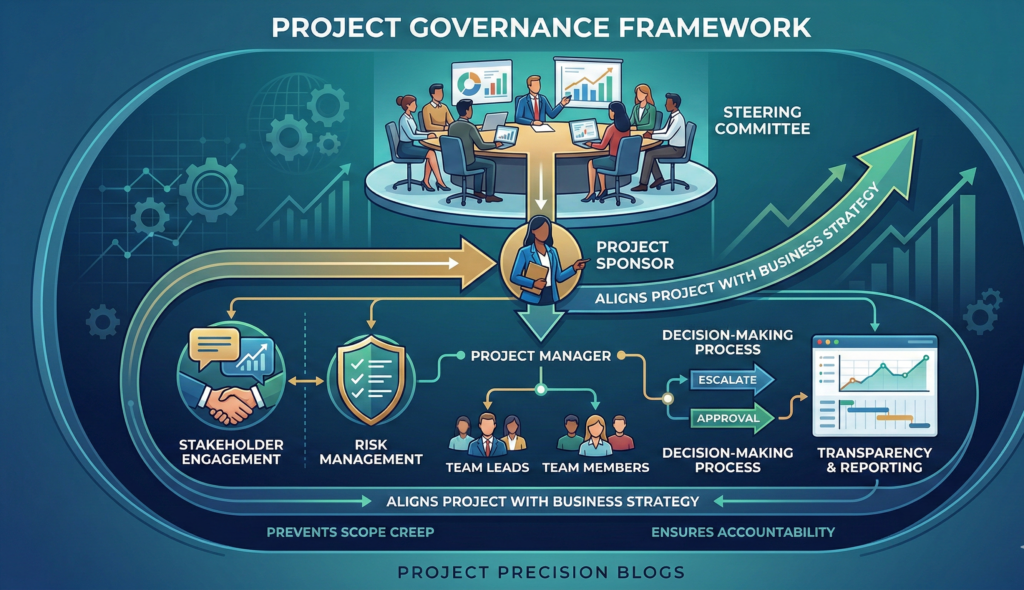
- Structure: Defining the roles. Who is the Project Sponsor? Who sits on the Steering Committee? Who has the final “green light” authority?
- Accountability: Ensuring everyone knows what they are responsible for. When roles are blurred, deadlines are missed.
- Stakeholder Engagement: A formal plan for how you communicate with everyone involved—from the CEO to the end-user.
- Transparency: Establishing a clear “audit trail” for decisions. If a project pivots, the why and how should be documented and accessible.
Why Governance Matters (The “Precision” Edge)
Without a governance structure, projects often fall victim to Scope Creep—that silent killer where a project slowly expands until it’s over budget and behind schedule. Governance acts as a gatekeeper.
The benefits are clear:
- Faster Decision-Making: No more “too many cooks in the kitchen.” You know exactly who needs to sign off.
- Risk Mitigation: Issues are identified and escalated through formal channels before they become disasters.
- Alignment: It ensures the project actually serves the company’s higher strategic goals, rather than just being a “cool idea.”
How to Implement It Without the Bloat
Many fear that “governance” means endless meetings and paperwork. To keep it precise:
- Scale to the project: A three-week internal task doesn’t need a 10-person steering committee.
- Automate reporting: Use your PM tools to generate status reports automatically rather than manually drafting them.
- Define the “Escalation Path”: Clearly state: “If X happens, we go to Person Y. If Y can’t solve it, we go to the Committee.”
The Bottom Line
Governance is the difference between a project that crosses the finish line and one that wanders off the tracks. By defining your rules of engagement early, you give your team the freedom to execute with total confidence.
Ready to sharpen your project oversight? Stay tuned to Project Precision for more deep dives into the mechanics of success.